
Botox Therapy in Dystonia
Dystonia is a movement disorder characterized by involuntary muscle contractions, leading to repetitive or twisting movements. Botulinum Toxin (Botox) therapy works by blocking nerve signals that cause muscles to contract, providing targeted relief and restoring function.
warningCommon Symptoms & Clinical Signs
Indication 1
Involuntary muscle spasms or twisting
Indication 2
Abnormal postures of the neck (torticollis) or limbs
Indication 3
Uncontrollable blinking (blepharospasm)
Indication 4
Cramping during specific activities (writer's cramp)
Non-Surgical Care
First-line & Conservative ManagementConservative and rehabilitative pathways focused on reducing irritation, relieving pressure, and building long-term core stability.
- check_circleEMG-guided Botulinum Toxin injections
- check_circleOral muscle relaxants and anticholinergic drugs
- check_circleSpecialized physical and occupational therapy
- check_circleRelaxation techniques and biofeedback
Surgical Interventions
Advanced & Minimally Invasive ProceduresPrecision surgical options using state-of-the-art keyhole approaches, robotic platforms, and microsurgical stabilization.
- medical_servicesDeep Brain Stimulation (DBS) for generalized dystonia
- medical_servicesSelective peripheral denervation (for severe cervical dystonia)
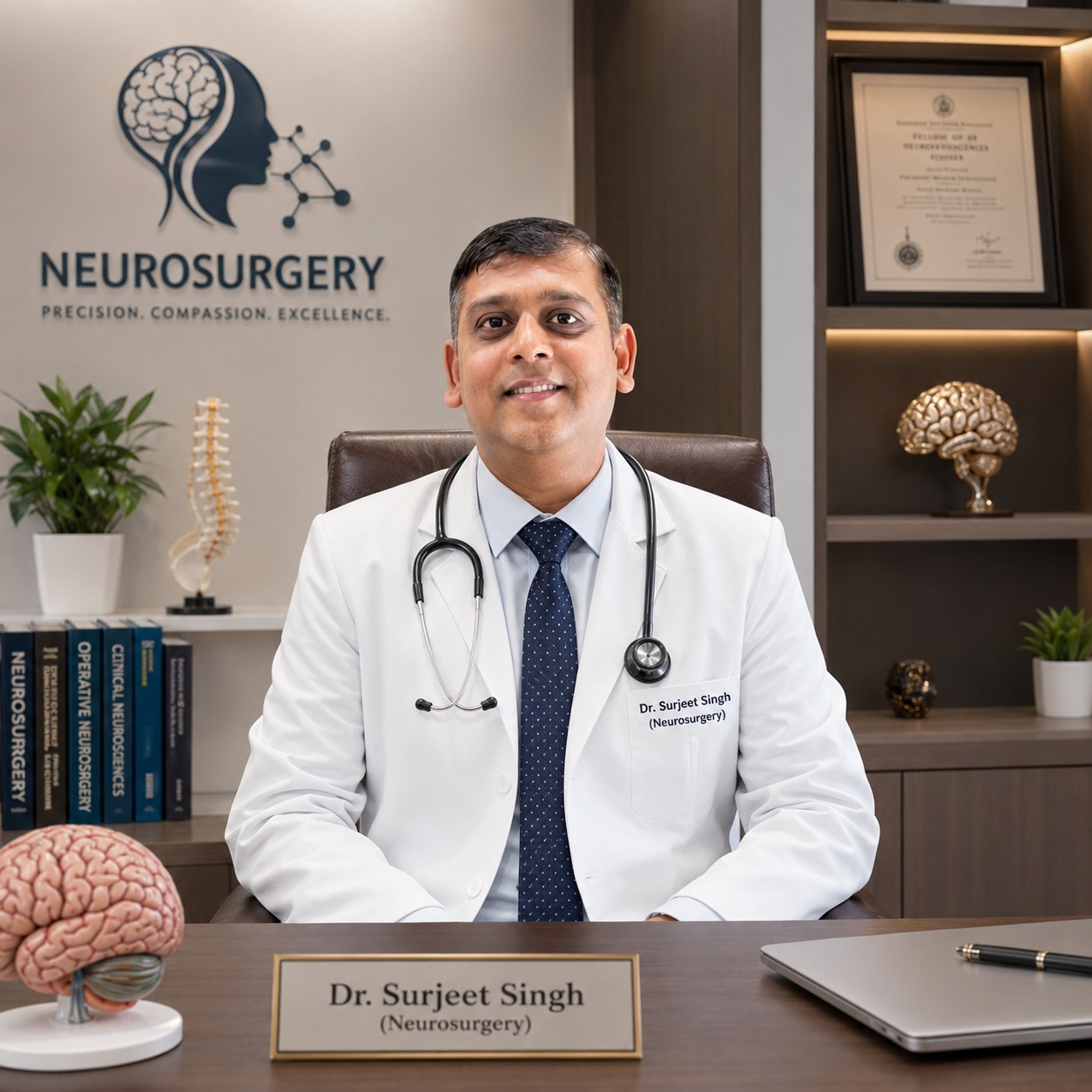
Dr. Surjeet Singh, MS, MCh (Neurosurgery)arrow_forward
Senior Consultant Neurosurgeon
Dr. Surjeet Singh is a highly skilled neurosurgeon specializing in brain and spine surgery. He has extensive experience in complex cranial surgeries, ...
Guided clinical care every step of the way.
Pre-Op Evaluation
Clinical spasm mapping and muscle target selection
The Procedure
EMG or ultrasound-guided Botox administration
Post-Op Recovery
Monitoring of therapeutic onset (typically 3-7 days post-injection)
Rehabilitation
Follow-up and re-injection schedule planning (every 10-12 weeks)
Frequently Asked Questions
Ready to take the next step in your recovery?
Schedule a comprehensive consultation with our specialist neurosurgical team today.