
Genetic Disorders
Neurogenetic disorders are conditions caused by changes in genes or chromosomes that affect the development and function of the nervous system. Examples include Down syndrome, neurofibromatosis, and muscular dystrophies. Early diagnosis allows for targeted gene-specific therapies and support.
warningCommon Symptoms & Clinical Signs
Indication 1
Developmental delays or intellectual disability
Indication 2
Hypotonia (floppy muscles) or stiffness
Indication 3
Dysmorphic physical features
Indication 4
Seizures or movement disorders
Non-Surgical Care
First-line & Conservative ManagementConservative and rehabilitative pathways focused on reducing irritation, relieving pressure, and building long-term core stability.
- check_circleComprehensive physical, speech, and feeding therapy
- check_circleAnticonvulsants or targeted medications
- check_circleSpecialized educational plans
- check_circleGenetic counseling and family support services
Surgical Interventions
Advanced & Minimally Invasive ProceduresPrecision surgical options using state-of-the-art keyhole approaches, robotic platforms, and microsurgical stabilization.
- medical_servicesOrthopedic corrective surgeries
- medical_servicesVentricular shunt placement (if hydrocephalus occurs)
- medical_servicesNerve decompression surgery
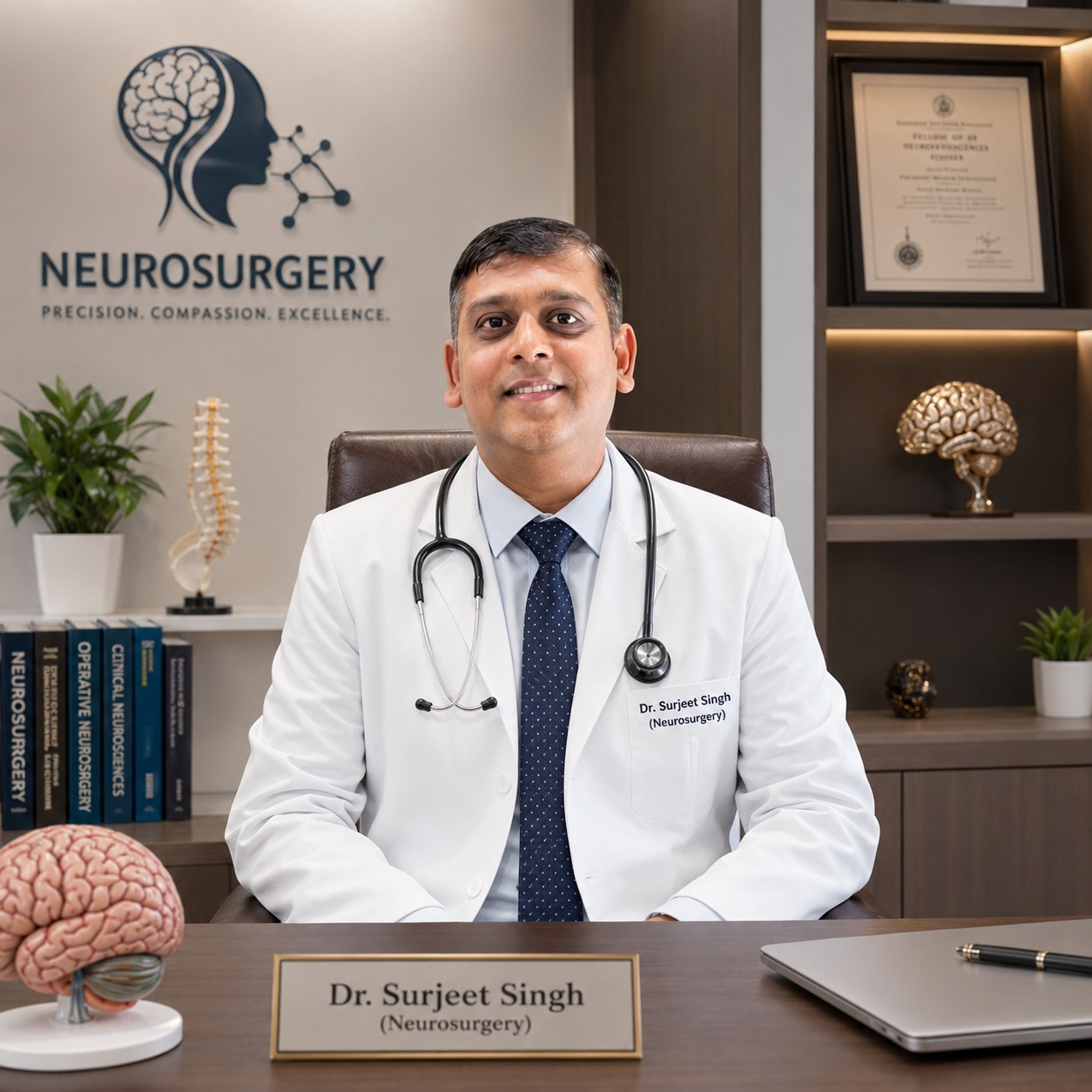
Dr. Surjeet Singh, MS, MCh (Neurosurgery)arrow_forward
Senior Consultant Neurosurgeon
Dr. Surjeet Singh is a highly skilled neurosurgeon specializing in brain and spine surgery. He has extensive experience in complex cranial surgeries, ...
Guided clinical care every step of the way.
Pre-Op Evaluation
Advanced genetic testing (microarray, exome sequencing)
The Procedure
Multidisciplinary neurodevelopmental profiling
Post-Op Recovery
Targeted symptomatic or gene-specific therapies
Rehabilitation
Ongoing development and growth tracking
Frequently Asked Questions
Ready to take the next step in your recovery?
Schedule a comprehensive consultation with our specialist neurosurgical team today.