
Minimally Invasive Spine Surgery
Minimally Invasive Spine Surgery (MISS) uses specialized instruments to view and treat spinal structures. Unlike traditional open surgeries, MISS avoids cutting through major back muscles, instead dilating them with tubular retractors, which leads to less post-operative pain and smaller incisions.
warningCommon Symptoms & Clinical Signs
Indication 1
Localized spinal pain
Indication 2
Leg pain or weakness
Indication 3
Stiffness in the spine
Indication 4
Difficulty standing or walking
Non-Surgical Care
First-line & Conservative ManagementConservative and rehabilitative pathways focused on reducing irritation, relieving pressure, and building long-term core stability.
- check_circleTargeted muscle strengthening and stretching
- check_circleOver-the-counter and prescription pain management
- check_circleInjections (facet joints or epidural)
- check_circlePosture training and ergonomics
Surgical Interventions
Advanced & Minimally Invasive ProceduresPrecision surgical options using state-of-the-art keyhole approaches, robotic platforms, and microsurgical stabilization.
- medical_servicesMinimally Invasive Transforaminal Lumbar Interbody Fusion (MIS-TLIF)
- medical_servicesMinimally invasive lumbar decompression
- medical_servicesPercutaneous pedicle screw fixation
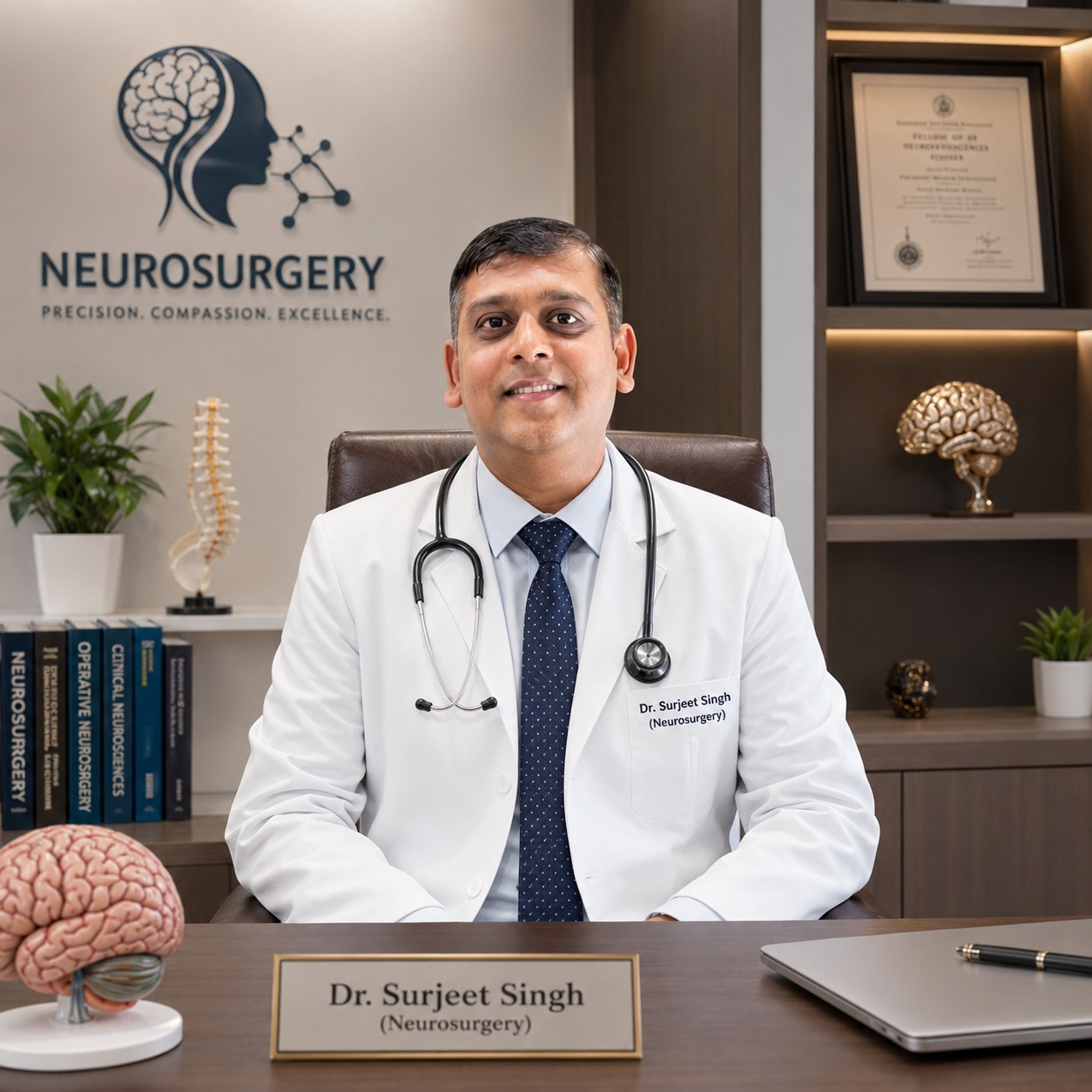
Dr. Surjeet Singh, MS, MCh (Neurosurgery)arrow_forward
Senior Consultant Neurosurgeon
Dr. Surjeet Singh is a highly skilled neurosurgeon specializing in brain and spine surgery. He has extensive experience in complex cranial surgeries, ...
Guided clinical care every step of the way.
Pre-Op Evaluation
Pre-operative 3D fluoroscopic planning
The Procedure
Tubular retractor-guided decompression or fusion
Post-Op Recovery
Same-day or next-day hospital discharge
Rehabilitation
Post-operative physical rehabilitation plan
Frequently Asked Questions
Ready to take the next step in your recovery?
Schedule a comprehensive consultation with our specialist neurosurgical team today.